
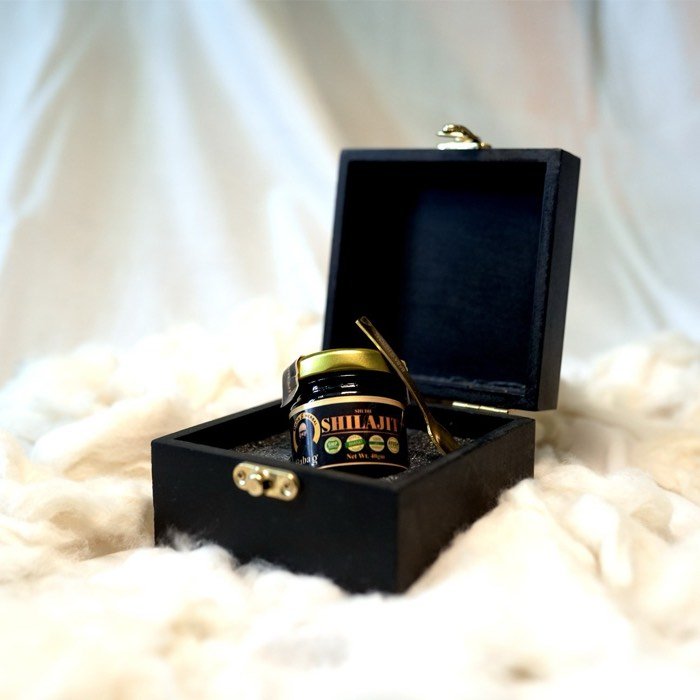
Raw shilajit seeps from rock and arrives carrying mineral grit and plant matter. It is not fit for use as collected — the classical texts are unambiguous about this, and the purification step, shodhana, is the whole difference between a raw material and a preparation.
The dissolution test
Purified resin dissolves cleanly in warm milk or warm water, leaving no sediment at the bottom of the cup. If grit settles out, something did not get removed. This is the most useful single check available to a buyer, and it costs nothing.
Texture and temperature
Good resin is stiff when cold and pliable when warm. It should stretch rather than snap, and it should not be brittle at room temperature. A resin that stays hard in a warm room has usually been cut with something.
What the label should tell you
A batch number and a date. Where it was purified, not only where it was collected. A net quantity you can weigh. If a jar carries none of these, there is nothing to hold the maker to.
What no test will tell you
Home tests cannot establish heavy-metal content, which is the thing that actually matters for safety and is the reason to ask for a batch lab report. Any maker unwilling to produce one for a specific batch is telling you something.