
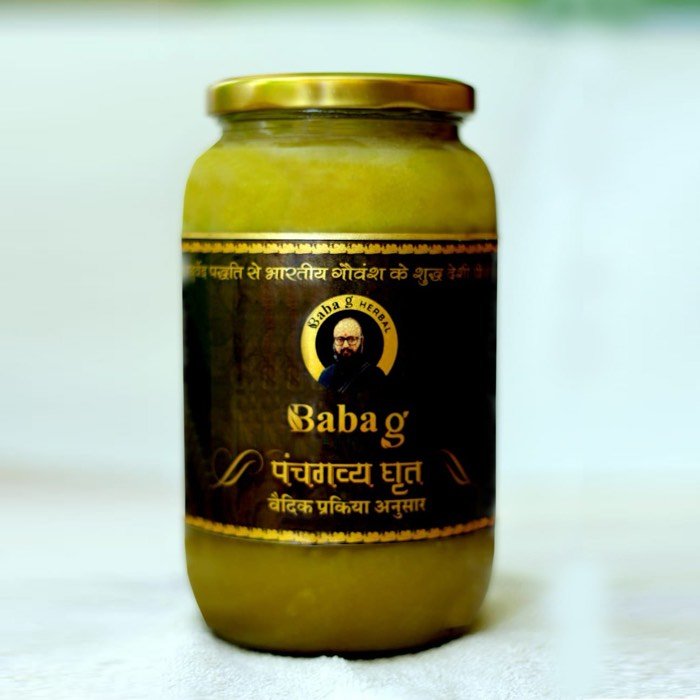
Bilona is a method, not a flavour. It describes making ghee the long way round: milk is set into curd, the curd is churned to butter, and the butter is cooked into ghee. Most commercial ghee skips the middle entirely — cream is separated from milk by machine and heated straight to ghee. That is faster, cheaper, and produces something quite different.
The four stages
It begins with milk from indigenous cows, set into curd the same day it is drawn. Waiting changes the result, so the timing is not a detail.
The curd is then churned — in our case by hand, in a wooden bilona, which is where the method takes its name. Churning brings the butter up slowly and leaves the buttermilk behind.
That butter is cooked over a low flame until the water has gone and the milk solids have settled and browned. Rushing this stage is the single most common shortcut, and it is easy to taste.
Finally the ghee is strained warm and filled. It sets grainy or smooth depending on how quickly the room cools it — both are normal, and neither indicates quality.
Where the word gets stretched
Three shortcuts turn up often enough to be worth naming. Cream-based ghee sold as bilona, where the curd stage never happened. Machine churning described as hand churning. And curd set from milk that has already travelled for two days, which is not the same as milk set the same day.
None of these are illegal, and none of them make a bad product. They simply are not what the word describes. If you are paying for the method, it is fair to ask which of the four stages actually took place.